

The Unit Passed. How Much Did Test, Retest and Rework Really Cost?
Final yield can hide expensive test loops, diagnostics, repair labor and replacement components. EMS costing should distinguish first-pass production from units that become good only after retest and rework.
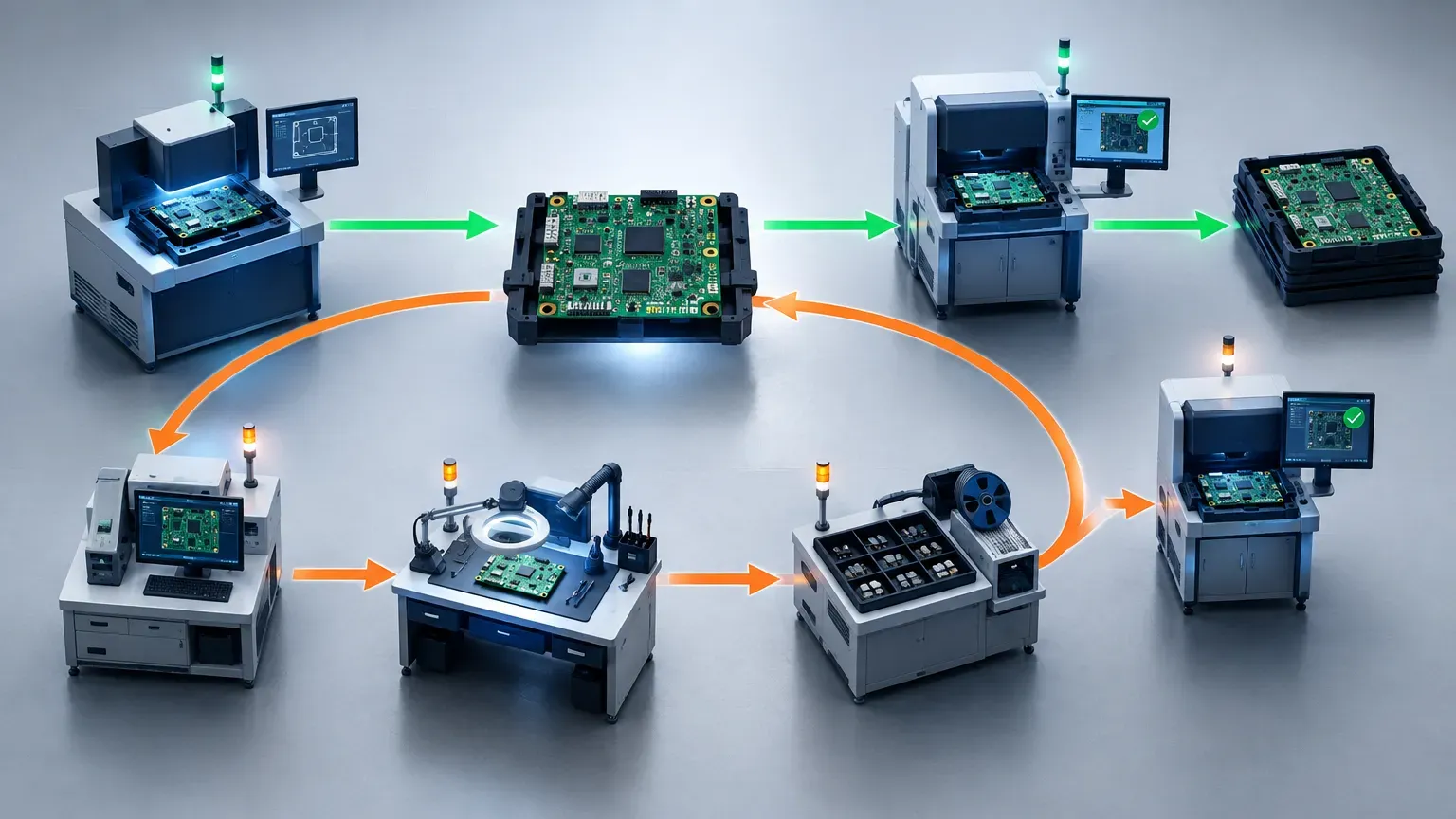
The short answer
A unit that eventually passes can still be expensive because diagnostics, retest, repair labor and replacement components are invisible in final-yield percentage. EMS profitability improves when first-pass success is separated from recovered output and the recovery burden is connected to the defect and work order.
The same question belongs to the wider The EMS Quote Looked Profitable. Where Did the Margin Go? operating picture: test and rework cost has to remain connected to the decisions made before and after it, rather than becoming a separate local control.
Separate first-pass and final yield
Final yield shows eventual good output. First-pass yield reveals how much work succeeded without recovery. Measure retest loops. A unit tested three times uses more station capacity than one that passes once, even if both ship. Capture diagnostic time. Troubleshooting can be more expensive than the physical repair, especially when skilled technicians are involved. Capture replacement components. Rework can consume additional high-value ICs, connectors or modules. Preserve that cost. Distinguish no-fault-found. Units that pass after retest without repair may indicate fixture or test instability rather than product defect. Track repair route. A repaired unit may repeat inspection, programming or functional test. Those operations add labor and lead time.
Use defect family. Connect rework cost to the failure mode so management knows which problems deserve engineering effort. Use revision and material context. A repair pattern may concentrate in one product revision or component lot.
Protect genealogy
If a trace-controlled component is replaced, update the final as-built record while capturing the repair event. Include engineer intervention where material. NPI or complex products can consume significant engineering support. Capture meaningful recurring effort. Review technician bottlenecks. Repair capacity can become a hidden constraint while the main production line appears healthy. Separate warranty repair from production rework. Both matter economically, but they belong to different lifecycle stages and customer-impact profiles. Use standard repair times carefully. Standard times can simplify costing, but recurring complex diagnostics may need a different treatment. Connect rework to customer program. Some programs can create much more recovery burden than standard BOM and routing imply.
Use corrected process evidence. When a defect is fixed, later rework cost should fall. That economic change helps prove the improvement worked. Do not normalize chronic rework. If repair is predictable and recurring, decide whether to fix the process, redesign, reprice or explicitly include it in the operating model.
Separate debug from mature production
NPI and first builds naturally require more diagnosis. Do not use launch rework as the permanent standard without checking mature production. Measure repair turnaround. Long repair queues delay shipment and increase WIP even if labor cost is modest. Time-to-repair is therefore a delivery and capacity metric as well as a quality metric. Use repair findings for root cause. Technicians often see whether the actual cause was component, solder, programming or test. Feed this diagnosis back into corrective action rather than recording only that the unit was fixed. Consider skill mix. A repair that requires senior engineering support is economically different from a standard technician procedure. Repeated specialist intervention can signal that the process or design is not mature.
Use retest count by failure mode. Some defects naturally require one confirmation test; others create repeated loops because diagnosis is unclear. Tracking retest count by defect family shows where troubleshooting or test design needs improvement. Separate productive test from diagnostic test. Normal production test is part of the planned route. Additional engineering or diagnostic testing after failure is recovery cost. Keeping them separate improves both costing and process analysis. Measure repair queue age. A short repair queue can be normal. Aging units indicate limited technician capacity, difficult diagnosis or missing replacement parts. The age contributes to delivery risk even before the labor is booked. Capture replacement-part source. If repair uses a high-value component from an alternate lot or manufacturer, genealogy and cost should reflect it where required. Rework should not become a traceability blind spot.
Use first-pass economics
A program with strong selling price but weak first-pass yield can consume disproportionate labor and test capacity. Review contribution before and after recovery cost to understand the real operating burden. Review repeated repair at the same location. If one component position repeatedly fails across units, the economics point toward a systemic process or design issue rather than random repair demand. Separate customer-return repair from factory rework. Field repair includes service logistics and customer handling that internal rework does not. Keep these lifecycle costs distinct even when the technical repair is similar. Turn repair evidence into standard improvement. When a repair method becomes common, the organization should decide whether to eliminate the defect source, formalize a controlled rework process, or update the commercial model. Chronic informal repair is not a stable operating state.
Use rework cost in capacity planning. A factory can hit planned production quantity while test and repair teams work overtime to recover failures. Include expected rework burden when deciding whether a program can scale on existing test and technician capacity. Separate tester bottleneck from repair bottleneck. A long queue may form because units wait for test capacity, not because technicians are slow. Measure where the time is consumed so management invests in the right resource. Review replacement-component recovery. Some removed components may be recoverable; others should be scrapped for quality or traceability reasons. Define the policy rather than assuming every replacement has zero residual value.
Use repair authorization levels
Routine approved rework can move quickly, while high-risk component replacement may require engineering or quality authorization. The cost model should not encourage technicians to choose the cheapest disposition when product risk says otherwise. Compare defect elimination with repair optimization. Making repair faster reduces recovery cost, but eliminating the defect can create a much larger benefit. Use repair economics as evidence for process or design investment, not only technician productivity. Include repeated programming and software recovery. Electronics rework is not always soldering. Reprogramming, firmware correction or test reconfiguration can consume station time and engineering support. Capture these recurring digital recovery paths where material. Review customer-specific retest requirements. Some customers require full test after any rework. Others allow targeted verification. The additional cycle can materially affect program economics and should be reflected in the service model.
Feed rework burden into standard cost carefully. If a low but stable rework allowance is structurally unavoidable, the company may include a realistic factor in costing. But avoid institutionalizing preventable defects simply because they have become familiar. Use rework economics in make-or-buy and automation decisions. If one test or repair step repeatedly consumes specialist labor, management can compare the recurring recovery cost with fixture improvement, test automation or process redesign. The business case becomes stronger when actual recovery hours and replacement material are visible rather than estimated from anecdote. Track first-pass improvement after corrective action. When engineering changes the process, compare first-pass yield and rework hours on later builds. A technical fix that reduces defects should also reduce retest, repair and queue burden. This gives management both quality and economic evidence that the improvement is sustained.
This evidence keeps recovered output from looking economically identical to first-pass success.
What management should measure
Measure first-pass yield, final yield, retest count, repair hours, diagnostic time, replacement-component cost, no-fault-found rate, rework by defect family, rework by customer/program and constrained test/repair capacity consumed by recovery.
A practical review
Choose the three programs with the highest rework hours. For each one, compare first-pass yield, retest loops, top defect, replacement parts and technician time. Then ask whether the problem belongs in process improvement, supplier action, design change or commercial repricing.
Where Epicor Mars fits in test and rework cost
For test and rework cost, the key system-design question is how to keep enterprise control and electronics-specific execution on the same operating thread. Epicor provides the enterprise-grade ERP foundation for customer orders, purchasing, inventory, planning, costing, finance, approvals and governance. Epicor Mars extends that foundation with the EMS industry context needed at the point of work, including programming, test and quality events.
That connection is directly relevant to The Unit Passed. How Much Did Test, Retest and Rework Really Cost?. Final yield can hide expensive test loops, diagnostics, repair labor and replacement components. EMS costing should distinguish first-pass production from units that become good only after retest and rework. When the Epicor Mars execution record stays tied to the Epicor work order, material and customer context, management can compare the business commitment with what the factory actually executed without maintaining a second source of truth.
For test and rework cost, that complementary positioning is the point: Epicor remains the enterprise-grade foundation, while Epicor Mars adds the EMS workflows needed to make this particular control operational on the factory floor. Explore Epicor Mars for electronics manufacturing.
Frequently asked questions
Can final yield be high while quality cost is poor?
Yes. Heavy rework can recover units and hide the original instability.
Should every repair minute be captured individually?
Not necessarily. Use a practical level that reveals recurring burden.
Why separate retest from repair?
Retest without repair can indicate test instability, while repair reflects product/process recovery.
Does rework belong in job cost?
Where it is material, yes, because it consumes labor, components and capacity for that job or program.