

A Sewing Line Is Available. But Is It the Right Line for This Order?
Nominal capacity can look reassuring while the wrong skills, machines, learning curve and changeover burden make an available line a risky production promise.
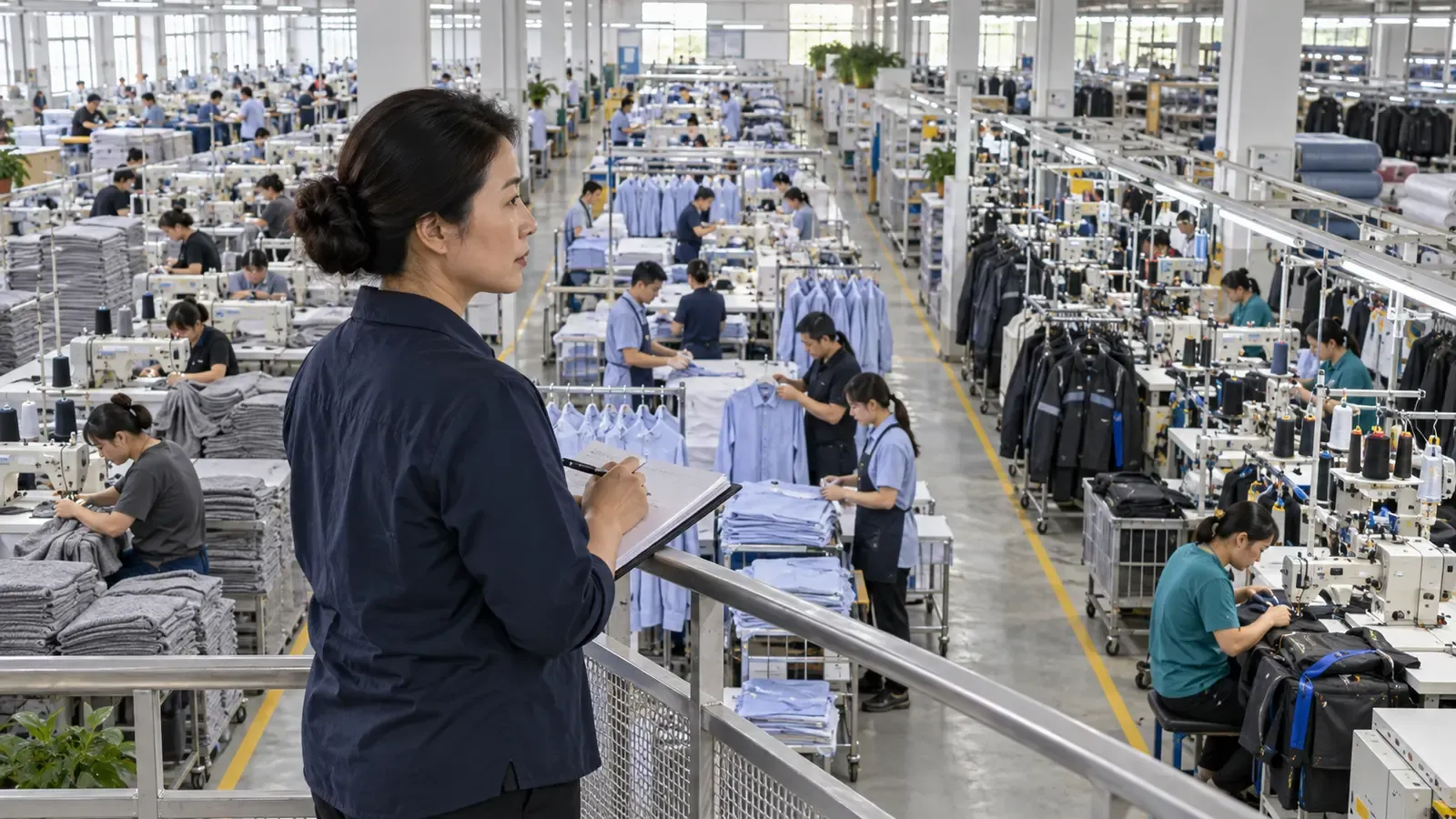
The line is empty at 7:30. Forty operators are seated, the machines are powered, bundles are waiting and the planning board shows eight available hours. From the meeting room, it looks like capacity.
On the floor, the supervisor sees something else. The style has a difficult curved pocket, two operations need attachments that arrived yesterday, and most of the operators last made knit tops. The first acceptable piece will take time. The line is available, but it is not yet the right line for the order.
This distinction explains why apparel plans can be full of hours and short of credible output.
The short answer
Garment line capacity planning should evaluate capability as well as time. A credible allocation considers operator skills, product and operation familiarity, machine and attachment readiness, engineering method, expected learning curve, quality risk, changeover burden and the stability of surrounding orders.
Available minutes are the container. Capability determines how much saleable output those minutes can produce.
Capacity is not interchangeable inventory
Factories often aggregate capacity into standard available minutes or daily pieces. The simplification is useful for long-range planning, but it becomes dangerous when applied to a specific style without adjustment.
One hour on a stable repeat programme is not equivalent to one hour on a complex first run. A line experienced in lightweight woven shirts is not automatically ready for structured outerwear. A machine shown in the asset list may be unavailable, under maintenance or configured for another operation. An operator can be present while the skill needed at a bottleneck is absent.
The plan therefore needs two views: nominal capacity and qualified capacity. Nominal capacity shows the time theoretically available. Qualified capacity estimates what the selected line can reliably produce for this order under current conditions.
Seven questions before assigning the line
1. Has the line made this product family?
Exact repetition is not essential, but adjacent experience matters. Fabric behaviour, seam construction, handling and quality expectations affect the learning curve.
2. Where are the critical operations?
The style may contain one or two operations that govern flow. Identify the skills, methods, machines and quality controls required there.
3. Are special machines and attachments physically ready?
“Available in the factory” is not the same as installed, tested and free for the planned window.
4. What must the line stop making first?
Changeover consumes output and attention. The outgoing order may also be relying on recovery time that the new plan assumes is free.
5. What evidence supports the target rate?
Use style history, product-family performance, method analysis and operator mix. Do not let one optimistic daily target become a planning fact.
6. How quickly will quality stabilise?
Early output that requires repair is not usable capacity. Include first-off approval, in-line learning and expected rework.
7. Which assumption is most likely to fail?
Name it. A plan becomes easier to manage when its fragile point is visible before line input.
The learning curve belongs in the promise
New styles rarely begin at mature efficiency. The first hours involve balancing, method correction, operator coaching and quality feedback. Yet commercial plans often use an average or target rate from day one.
A better plan represents the ramp. Day-one output may be lower, followed by improvement as the line learns. The exact curve should come from the factory’s experience with comparable products, not an invented universal percentage.
This changes decisions. A line with a slightly later start but strong related experience may complete earlier than a nominally free line with a steep learning curve. The calculation also exposes where pre-production work can shorten the ramp: operation breakdown, machine setup, pilot pieces, operator training and early quality agreement.
The sample room can contribute valuable evidence here. The Sample Room Knows First explains how construction difficulty and method learning should travel into bulk readiness rather than remain personal knowledge.
The hidden capacity inside quality
Production reports frequently count output before quality consequence is fully known. If a line produces 1,000 pieces and 150 require repair, its effective capacity is not the same as a stable line producing 900 accepted pieces.
Planning should distinguish gross output, accepted output, work awaiting inspection and rework. This is not a case for delaying every number until final audit. It is a case for understanding which stage each number represents.
Quality also changes the future. Rework competes for operators and machines, disrupts bundle flow and may occupy the same capacity promised to the next order. A line allocation that ignores inherited rework begins with a hidden queue.
A two-line decision
Consider a tailored shirt order. Line A becomes free on Monday and has 42 operators, but it has been running simple knit tops. Line B is occupied until Tuesday afternoon and has 36 operators with recent woven-shirt experience. The plan based on headcount and start date selects Line A.
A capability view adds the machine set, supervisors, critical-operation skills, expected learning curve, first-quality timing and changeover work. Line B may now be the safer choice. Or management may keep Line A but move experienced operators, prepare attachments and run a controlled pilot before the full input.
The purpose is not to make a perfect forecast. It is to make the trade-off explicit while choices remain.
Connect line allocation to the exception economy
Capability gaps are exceptions when they threaten the promise or require cross-functional action. They belong in the exception-management framework for garment manufacturing, with an affected order, consequence, decision window and owner.
Examples include a missing attachment, an untrained critical operation, a delayed method approval, an unstable incoming style or a planned rate unsupported by history. Each has a different remedy and latest useful decision time.
Without this structure, planning may keep moving blocks on a calendar while production inherits the real problem at line input.
What connected planning can show
ACC describes Venus as a platform for garment and apparel operations with order, material, production and multi-factory capabilities. The official Venus overview lists the current scope.
The operating principle is to connect the order’s construction and quantity with the resources and production evidence used to plan it. Line history, machine requirements, work-study information, readiness events and actual output can inform a more credible allocation.
Shop-floor data does not remove judgement. It improves the evidence behind judgement. A planner still balances customer priority, factory relationships, changeover, workforce development and risk. The system should make assumptions visible and compare actual performance with them.
A capability card for every line
Factories can begin without a complex model. Create a living capability card with:
- product families and fabrics recently produced;
- critical skills and certified operators;
- installed and readily deployable machine types;
- recent ramp-up and stable-rate evidence;
- common quality risks and repair burden;
- current supervisor and engineering support;
- scheduled changeovers, maintenance and inherited rework.
Keep the card evidence-based. Avoid labels such as “strong line” that never expire. Capability changes as people move, equipment changes and experience becomes stale.
When a planner allocates an order, record the match and the exceptions. Over time, actual results improve the capability view.
Measures that reveal planning quality
Efficiency alone is insufficient. A line can appear efficient after a difficult order has already been moved elsewhere. Combine measures:
- planned versus actual time to first acceptable output;
- ramp to stable accepted rate;
- changeover duration;
- rework and defect burden during startup;
- number of capability exceptions found after line input;
- schedule changes caused by skill or machine mismatch;
- recovery effort required to protect delivery.
The aim is not to penalise lines that take challenging work. It is to improve the assumptions used to prepare and allocate that work.
Frequently asked questions
What is qualified garment line capacity?
It is the output a particular line can credibly produce for a particular order, considering skills, equipment, familiarity, learning curve, quality and current constraints—not time alone.
Is standard minute value enough for line planning?
It is an important workload measure, but it does not by itself describe operator capability, machine readiness, learning or quality stability.
Should the most experienced line always receive the hardest style?
Not automatically. Customer priority, workforce development, future load and available support also matter. The capability gap should be visible so management can choose consciously.
How far ahead should capability be checked?
Early enough to change the line, prepare equipment, train operators or adjust the promise. Recheck close to input because people, machines and preceding orders may have changed.
Can MES data predict capability?
Execution history can provide useful evidence about ramp, output and quality. Prediction still depends on comparable context and sound operational judgement.
The better planning question
“Where is there space?” is necessary, but it is not sufficient. The better question is: “Which line can turn this order into accepted output with the most credible path, and what must be true before it starts?”
That question moves planning closer to reality. It values preparation, makes learning visible and stops treating every empty hour as equal. The factory does not gain more time; it gains a more honest understanding of what its time can do.