

ERP Says the Job Is Released. What Does the Shop Floor Need Next?
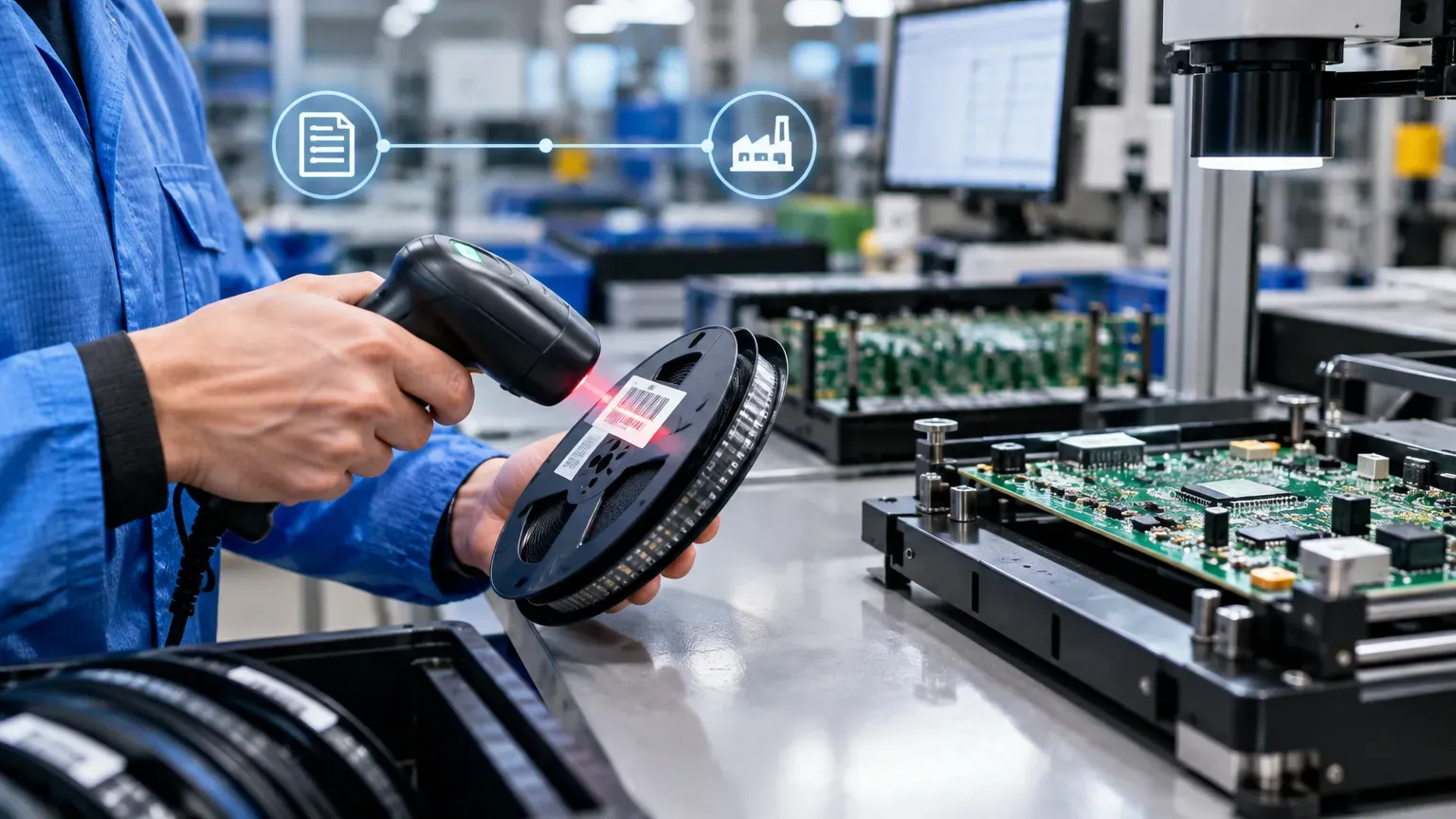
Enterprise ERP provides the controlled business backbone, but EMS operators also need industry-specific execution: barcode-driven material identity, production steps, inspection, WIP status and traceability tied back to the same work order.
The short answer
When Epicor releases an EMS work order, the shop floor still needs an industry-specific execution layer that translates enterprise planning into controlled physical actions. Operators need barcode-driven material identity, operation sequence, WIP status, inspection, defect/rework events and traceability connected back to the same work order.
This is the value of the Epicor Mars positioning: Epicor as the enterprise-grade foundation; Epicor Mars as the electronics-manufacturing execution and industry layer.
The architecture should not create two competing systems. It should extend the enterprise record to the point of work.
The same question belongs to the wider From RFQ to Production Ready: What Does an EMS Manufacturer Need to Control? operating picture: shop-floor execution has to remain connected to the decisions made before and after it, rather than becoming a separate local control.
ERP release is a business event
Epicor can establish that the work order exists, has demand, planned material, routing and enterprise authorization.
That is essential.
But the operator needs more immediate context:
- which job;
- which revision;
- which material;
- which station;
- what quantity;
- what instruction;
- what inspection;
- what next step.
The industry execution layer presents that context at the point of work. Preserve one work-order identity. Do not create a shop-floor order that loses the ERP relationship.
The MES/execution record should remain connected to the Epicor work order.
This lets material issue, production quantity, scrap, labour, quality and cost remain part of the enterprise history.
The goal is one operational thread with different user experiences.
Use barcode-driven material verification. Operators should not need to compare long component numbers manually.
Scanning can verify that the physical material matches the expected job requirement and approved-source context.
Where the control is needed, a mismatch can be stopped or escalated.
This reduces the chance that a physically similar component is issued incorrectly. Show revision at the point of work. Engineering revision should not remain only in an engineering screen.
The operator should know which revision or instruction is effective for the work order.
If an ECN changes the job, the execution layer needs to receive the updated state.
This is critical when old and new revisions coexist.
Capture WIP events
Management needs more than work-order released and completed.
Useful shop-floor events can include:
- started;
- operation completed;
- quantity passed;
- quantity failed;
- WIP moved;
- hold;
- rework;
- repair.
These events create operational visibility without requiring supervisors to maintain parallel spreadsheets. Connect quality to the operation. Inspection results become more useful when tied to the actual job, material and operation.
A defect should have context.
If rework is required, the work-order history should show that path.
This supports both quality improvement and genealogy. Support actual material consumption. Planned BOM tells the factory what should be used.
Execution can capture what was actually used.
This matters when approved alternates, lot identity and repair changes affect the build.
Epicor Mars can add this electronics-specific execution context while Epicor remains the authoritative enterprise record.
Avoid disconnected MES islands. A standalone MES can solve real shop-floor problems.
The risk appears when it develops separate master data, order state and material truth.
Then teams reconcile ERP and MES manually.
A better architecture defines ownership:
- Epicor owns enterprise master/transaction control;
- Epicor Mars handles industry execution where needed;
- shop-floor events synchronize back to the enterprise record.
This reduces duplicate truth.
Keep operator experience simple
Enterprise-grade does not mean complicated screens.
Operators need task-focused interaction.
A station may need only:
1. identify employee/station;
2. scan work order;
3. verify material;
4. record quantity;
5. perform inspection;
6. complete operation.
The complexity stays in the control logic, not in forcing operators to navigate full ERP. Use exceptions to trigger action. The execution layer should make abnormal conditions visible:
- wrong material;
- wrong revision;
- quality hold;
- missing component;
- failed inspection;
- operation out of sequence.
The goal is not to stop every deviation.
It is to route the exception to the right decision rather than letting it disappear into manual workaround. Synchronize financial impact. Shop-floor execution ultimately affects enterprise economics.
Material consumption, labour, scrap, rework and completion should feed the ERP record under the designed integration.
This is why Epicor foundation matters.
The factory event becomes part of cost, inventory and management reporting rather than remaining a local MES statistic.
Support multi-site consistency. EMS organizations can have several plants.
An enterprise foundation gives common customer, product, purchasing, financial and governance structure.
Epicor Mars can provide a consistent electronics execution model while allowing controlled site variation.
This is stronger than building unrelated shop-floor tools at each factory.
Protect enterprise security and audit
Operational ease should not bypass enterprise control.
User authority, work-order status and transaction integrity need governance.
The architecture should preserve auditability while simplifying the operator experience.
This balance is a key benefit of building industry workflows on top of an enterprise-grade platform. Design integration around event ownership. Not every shop-floor event needs to become a separate enterprise transaction immediately.
Define which events Epicor Mars manages operationally and which must update Epicor as authoritative business records.
Examples might include intermediate WIP status in the execution layer, while material issue, completion and inventory movement update the ERP according to the designed integration.
Clear ownership prevents duplicated transactions. Keep Epicor Mars industry logic upgradeable. One reason to separate enterprise foundation from industry execution is maintainability.
Core financial, purchasing and inventory capability can continue to evolve with Epicor, while Epicor Mars concentrates electronics-specific behavior in a controlled industry layer.
This is preferable to scattering custom EMS logic across unrelated screens and reports.
The implementation still requires disciplined interfaces and version governance.
Give management one enterprise view. Operations may need detailed station data, while management needs order, inventory, cost and delivery context.
By connecting Epicor Mars execution to Epicor, management can interpret shop-floor status in the same enterprise framework used for planning and finance.
That is the strategic value of the layered architecture: specialized execution without fragmented business truth.
Let operator UX reflect process, not ERP structure
Enterprise systems are usually organized around business objects.
Operators think in actions: start job, load material, build, inspect, move, complete.
Epicor Mars can translate Epicor-controlled data into task-oriented screens that reflect this execution sequence.
This reduces training burden while still preserving enterprise transaction rules behind the scenes. Use shop-floor evidence to improve planning. Execution data should not stop at production reporting.
Actual cycle time, WIP delay, shortage, defect and rework can improve future planning and management decisions.
Because the Epicor Mars layer is connected to Epicor, these operational facts can be interpreted with order, material, cost and customer context.
That is more valuable than isolated MES metrics.
Preserve offline and recovery discipline where needed. Factories need a clear plan for network interruption or device failure.
If temporary offline processes are allowed, define how transactions are recovered without creating duplicate consumption or broken traceability.
Enterprise control includes exception recovery, not only normal operation. Scale controls by product requirement. Not every EMS product needs the same scan points, inspection or serial genealogy.
Epicor Mars should support differentiated execution rules while Epicor maintains the common enterprise backbone.
This allows the manufacturer to serve simple and high-control products without forcing the most complex workflow onto every line.
What management should measure
Useful indicators include:
- work orders released but not started;
- material verification failures;
- revision mismatches;
- unplanned substitutions;
- WIP aging by operation;
- defect/rework events;
- manual ERP/MES reconciliation;
- delayed production postings;
- traceability completeness;
- shop-floor transactions outside the controlled workflow.
These show whether ERP planning is reaching execution cleanly.
A practical review
Take one released Epicor work order.
Follow it physically from material issue through first operation, inspection and completion.
At each step, ask whether the operator gets the correct job/revision/material context from the controlled system or must rely on paper, memory or a spreadsheet.
Those gaps define the Epicor Mars execution opportunity.
Where Epicor Mars fits in shop-floor execution
For shop-floor execution, the key system-design question is how to keep enterprise control and electronics-specific execution on the same operating thread. Epicor provides the enterprise-grade ERP foundation for customer orders, purchasing, inventory, planning, costing, finance, approvals and governance. Epicor Mars extends that foundation with the EMS industry context needed at the point of work, including material identity and readiness.
That connection is directly relevant to ERP Says the Job Is Released. What Does the Shop Floor Need Next?. Enterprise ERP provides the controlled business backbone, but EMS operators also need industry-specific execution: barcode-driven material identity, production steps, inspection, WIP status and traceability tied back to the same work order. When the Epicor Mars execution record stays tied to the Epicor work order, material and customer context, management can compare the business commitment with what the factory actually executed without maintaining a second source of truth.
For shop-floor execution, that complementary positioning is the point: Epicor remains the enterprise-grade foundation, while Epicor Mars adds the EMS workflows needed to make this particular control operational on the factory floor. Explore Epicor Mars for electronics manufacturing.
Frequently asked questions
Is Epicor Mars a separate ERP?
The intended positioning is Epicor Mars as an electronics/EMS industry solution built around an Epicor enterprise-grade ERP foundation, not a competing generic ERP.
Why not run everything directly in ERP screens?
Enterprise ERP controls the business backbone; focused execution screens can simplify shop-floor work while preserving the same controlled transaction context.
Does MES need separate master data?
Keep duplicate master data to a minimum. Define Epicor as the authoritative enterprise source and synchronize only what execution requires.
What should flow back from the shop floor?
Typically actual material, production quantity, labour/time where required, quality, scrap/rework and completion events, according to the implementation design.