

The Site Found a Better Way. Has the Design Record Caught Up?
Field-led changes can improve buildability, but they create risk when the installed condition, approval trail and design record diverge. The project needs a controlled path from site decision to approved record.
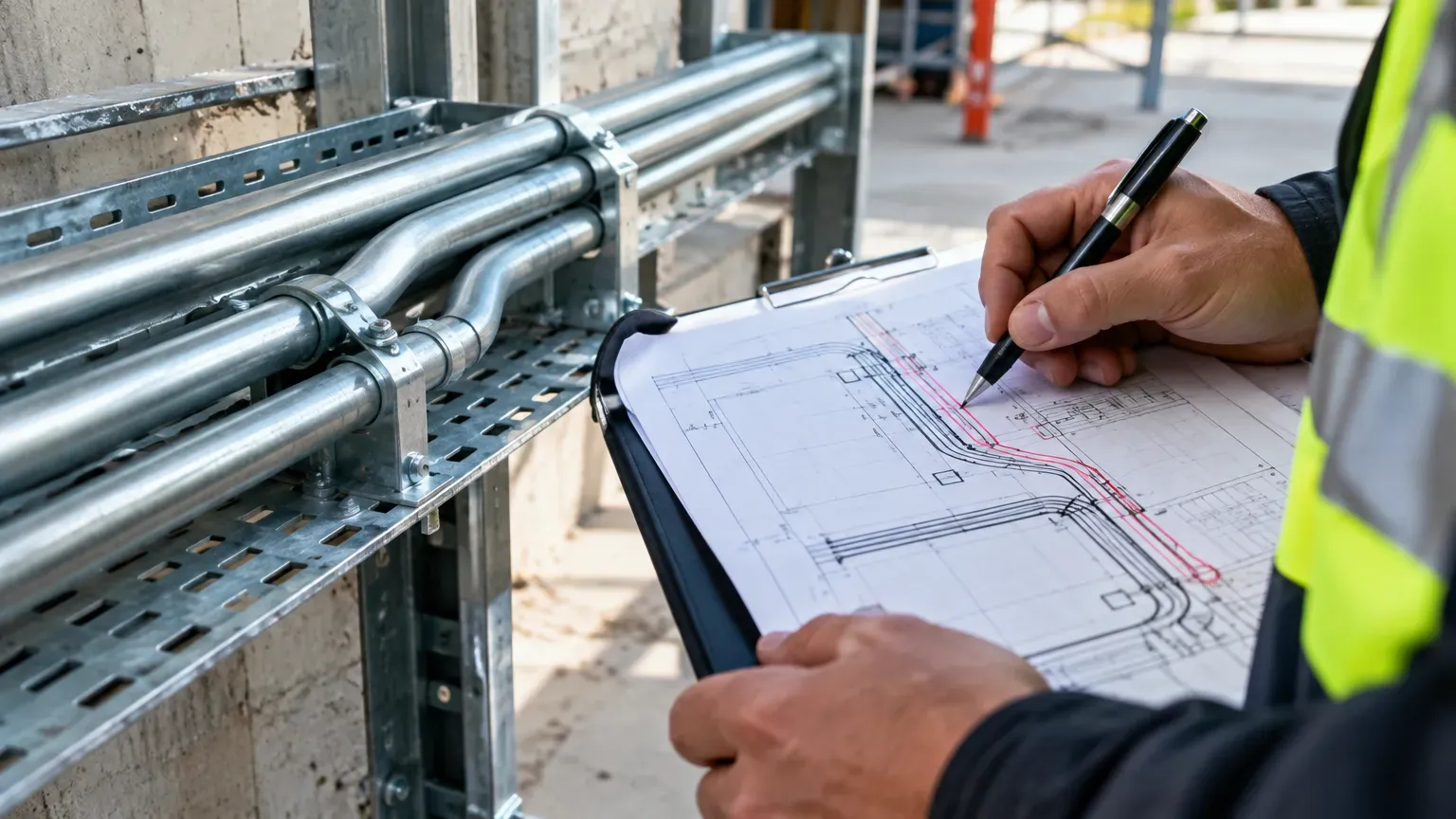
The short answer
Field-led changes are often necessary. The risk begins when the physical solution moves faster than the approved design record.
A site team may find a better route, resolve a clash or improve buildability. If that decision is not reflected through approval, redline and final design information, the project can end up with several competing versions of reality.
The objective is not to slow down site problem-solving. It is to make sure what was built, what was approved and what the record shows eventually converge.
Good projects improvise — but controlled projects capture the improvisation
Construction drawings cannot predict every physical condition.
The site will discover clashes, access problems, dimensional differences and sequencing constraints.
Experienced engineers and supervisors often find practical solutions faster than the formal design process can react.
That capability is valuable.
The problem comes when the solution remains verbal.
A pipe route changes. A support moves. A detail is altered. Work continues.
Weeks later, the designer still believes the original detail was built.
This is not simply a documentation problem. It can affect inspection, testing, maintenance, warranty and future work.
The first question is whether the field change needs approval
Not every site adjustment has the same significance.
Some are within an approved tolerance or method. Others change design intent, material, performance, interface or contractual scope.
The project needs a clear route for deciding which is which.
That decision should be quick enough to support production.
If the approval process is too slow, teams will be tempted to build first and record later.
If the control is too loose, the project can accumulate undocumented changes that become difficult to validate.
The goal is a proportionate process: fast for minor clarifications, formal where design or commercial consequence exists.
Redlines are useful only if they become part of the controlled record
Site redlines are often excellent evidence.
They capture what actually changed while the people and physical condition are still present.
But redlines can become a dead end.
They sit on marked-up prints, tablets or local folders and never reach the designer, document controller or as-built record.
A redline should therefore have a destination.
Does it require a revised drawing?
Does it need consultant approval?
Does it change a subcontract scope?
Does procurement need to know?
Does the as-built package need updating?
The broader design-to-workfront readiness model depends on information flowing both directions: design to site, and site reality back to the design record.
Field changes can have commercial consequences even when they save time
A better site solution can still change cost or responsibility.
Perhaps the contractor chooses a different support arrangement to keep the work moving. The change may reduce labour but increase material. It may affect a subcontractor’s scope. It may result from an instruction, a design gap or an unforeseen condition.
If the project only captures the technical answer, the commercial story can disappear.
The change record should therefore preserve why the change occurred and who authorised it.
That becomes important later if cost or entitlement is questioned.
A smart field solution should not become an unexplained variance.
The as-built record starts long before handover
Many projects treat as-built drawings as a closeout activity.
That is risky.
By the time practical completion approaches, the people who remember the changes may have left. Temporary markings may be lost. Subcontractors may be demobilised.
The most reliable as-built record is created progressively.
That does not mean final drawings must be produced every week.
It means field changes are captured while the evidence is fresh and remain traceable until they are incorporated into the final record.
This makes closeout faster and more credible.
A design record that lags the site eventually becomes a safety and maintenance problem
The final record is not only for the contractor.
It may be used by operators, maintenance teams, future designers and anyone planning later alterations.
If the record does not reflect the installed condition, future decisions can be made on false assumptions.
That gives field-change control a longer life than the construction programme.
The project is not simply documenting what happened for contractual completeness.
It is creating the information future users will trust about the asset.
The strongest process rewards fast capture, not perfect paperwork
Field teams are more likely to record changes when the process is simple.
A photograph, marked-up drawing, location reference and short description can often provide enough initial evidence.
The formal design and document-control steps can follow.
The key is to capture the change at the moment it happens.
A process that demands perfect paperwork before anyone records the event usually produces less reliable information.
Good control therefore separates rapid field capture from formal approval while keeping the two connected.
This also creates a valuable learning loop. If the same type of field change appears repeatedly, the issue may be telling the business something about standard details, coordination quality or tender assumptions.
The record can therefore improve future projects instead of merely documenting the current one.
The control becomes even more important when several trades are affected by one field decision.
Moving one opening may solve a structural problem and create a coordination issue for services. Changing one support may affect fireproofing, access or maintenance clearance. A local improvement can therefore have consequences beyond the team that proposed it.
This is why field changes need enough visibility to reach the affected interfaces before the solution becomes irreversible.
The project does not need a committee for every adjustment. It needs a route for recognising when a local change is no longer local.
There is also a timing issue.
The later the design record catches up, the more difficult it becomes to reconstruct the reason for the change. Photographs lose context. Mark-ups become ambiguous. People leave the project. The physical work may be covered up.
Capturing the change early preserves the evidence while it is cheap.
That has real value at handover. An as-built record built from progressive field evidence is far more credible than one reconstructed in the final weeks from memory and scattered mark-ups.
It can also protect the project commercially. If a field change resulted from incomplete information, a client instruction or an unforeseen condition, the contemporaneous record helps explain responsibility.
Good field-change control therefore serves design integrity, quality, commercial evidence and future asset information at the same time.
The process can remain simple. What matters is that the site decision does not disappear once the immediate problem has been solved.
One practical way to preserve that trust is to separate temporary permission from final record closure.
The site may receive authority to proceed with a field solution before the final revised drawing is issued. That can be entirely reasonable when programme pressure is real.
But the temporary approval should remain visible until the permanent design record catches up.
Otherwise the project risks treating “permission to build” as “record fully updated”.
Those are different states.
Keeping the distinction visible allows the site to move quickly without losing the obligation to complete the design trail.
That balance is important because effective field control should support production rather than force teams to choose between speed and traceability.
The final test is whether another person joining the project months later can understand what changed and why.
If the answer depends on finding the original supervisor or scrolling through personal messages, the record is too fragile.
A controlled field-change trail should make the installed condition understandable without relying on memory.
Where Epicor Saturn fits in field-change control
Epicor provides the enterprise-grade ERP foundation for approvals, purchasing, finance and core business governance. Epicor Saturn adds the construction and engineering project context that connects field changes to project records, subcontract packages, site activity and cost.
That connection matters because a field decision can affect both the technical record and the commercial position.
Epicor Saturn provides the project-centric industry layer while Epicor supplies the enterprise-grade transactional foundation underneath it. Explore Epicor Saturn for construction and engineering.
Frequently asked questions
Should every field adjustment become a formal design change?
No. The project should distinguish minor adjustments from changes affecting design intent, performance, scope or responsibility.
Why are redlines important?
They capture site reality while the change is fresh and can feed the controlled design and as-built record.
When should as-built information be created?
Progressively during construction, not only at project closeout.
Why can field changes affect commercial control?
Because the reason for the change may alter scope, cost, responsibility or entitlement.