

The Plant Is on Site. How Much of the Day Is It Creating Value?
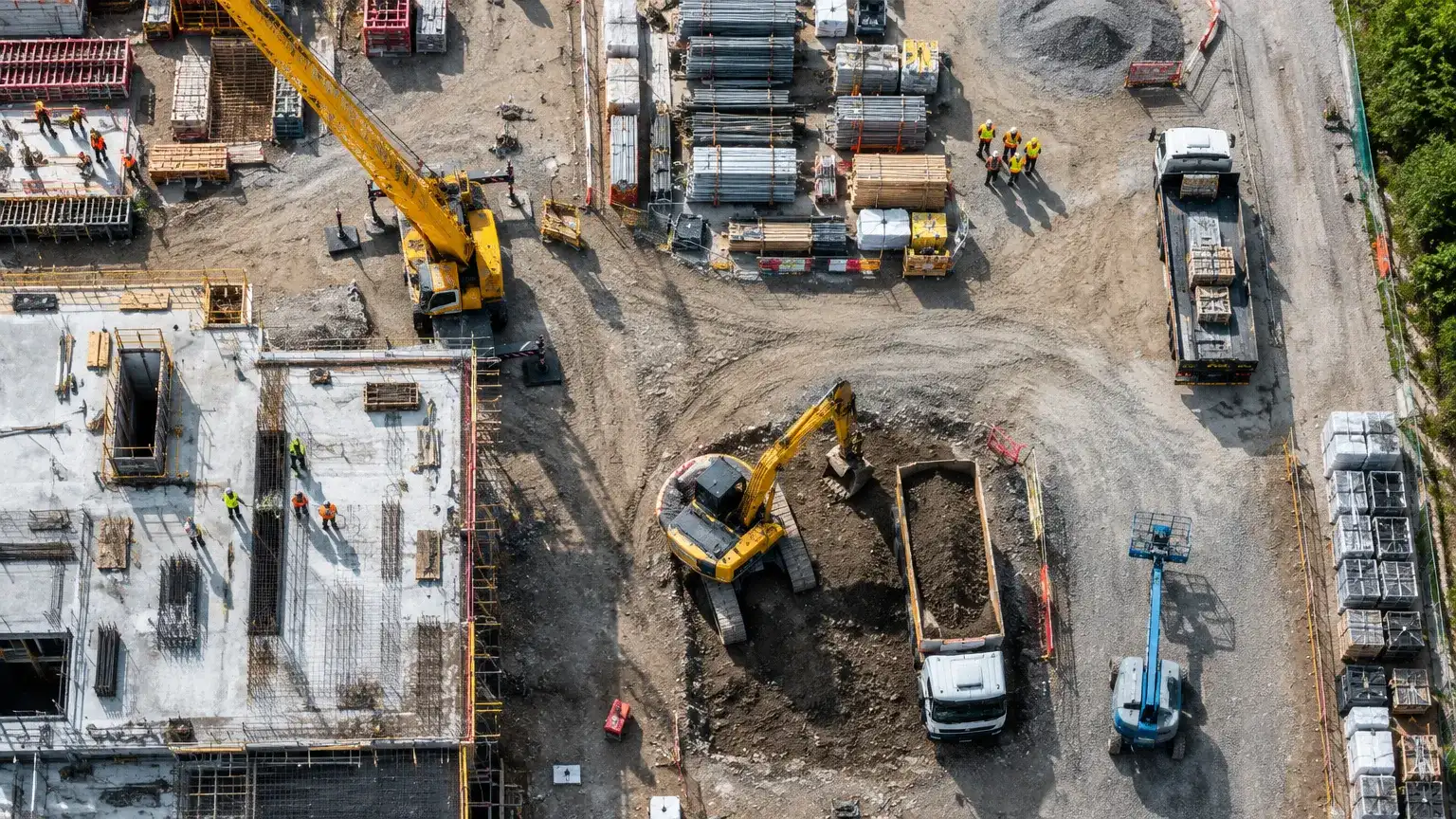
Plant availability is not the same as plant productivity. Cranes, excavators, lifts and specialist equipment can be present all day while waiting on access, crews, material, permits or sequence.
The short answer
Plant presence is not plant productivity.
A crane, excavator, hoist or specialist machine can be on site and fully chargeable while spending much of the day waiting on crews, material, permits, access or sequence.
The useful management question is not “is the plant here?”
It is “what proportion of the available time is creating project output, and what is stopping the rest?”
Equipment can be idle because the project is not ready for it
Plant is often booked early because the programme says the workfront needs it.
Once it arrives, management expects utilisation.
But plant depends on the rest of the production system.
A crane needs loads ready, lifting routes clear, crews prepared and permits in place.
An excavator needs access and a released work area.
A hoist needs coordinated demand.
If those conditions fail, equipment waits.
The idle time appears to be a plant issue, but the real cause may sit elsewhere.
This is why utilisation is a useful cross-functional signal.
It exposes whether the project is coordinating resources around executable work.
The expensive hours are often between productive tasks
Equipment reports can focus on whether the machine operated at all during the day.
That can hide the real loss.
A crane may complete several lifts yet spend long gaps waiting between them.
An excavator may work intensively for two hours and then remain idle because the next area is not released.
A MEWP may be shared among too many crews and create queues.
The project should therefore pay attention to the intervals between productive operations.
What caused the gap?
Was material not ready?
Was the crew waiting?
Was another trade using the same access?
Did supervision or permit approval arrive late?
These questions turn utilisation into production intelligence.
High utilisation can also be a warning
More is not always better.
Plant operating near full utilisation can become a bottleneck if several workfronts depend on the same resource.
A tower crane may be productive all day and still constrain the project because demand exceeds capacity.
The site then experiences queueing.
Crews wait for lifts. Materials arrive out of sequence. Trades compete for slots.
The equipment itself is not underperforming.
The production system is overloaded.
That is why utilisation should be read with demand.
Low utilisation may indicate poor readiness.
Extremely high utilisation may indicate insufficient capacity or poor sequencing.
Both can reduce site productivity.
Shared plant exposes coordination quality
Shared equipment is especially revealing.
When one crane, hoist or lifting route supports several trades, the project has to make priorities explicit.
Without coordination, the loudest or most urgent request wins.
That creates unstable production.
A better approach is to link major plant demand with the workfront plan.
Which lifts enable tomorrow’s critical work?
Which deliveries have real programme consequence?
Which activities can move to a different time?
This turns shared plant from a reactive service into a planned project resource.
The wider site-production view becomes stronger when plant demand, labour and workfront readiness are considered together.
Plant idle time can reveal hidden programme cost
A machine waiting for two hours is an obvious cost.
The bigger consequence may be elsewhere.
The crew waiting for the machine may also lose two hours.
A delivery may be delayed.
The next trade may miss access.
One plant constraint can therefore create multiple layers of lost productivity.
This is why the project should avoid viewing plant cost in isolation.
The operational consequence may be much larger than the hire rate.
The same is true in reverse.
A small investment in additional plant or a revised shift pattern can sometimes unlock several crews at once.
Management needs the production context to judge that decision.
Presence should not become a reason to keep plant indefinitely
Once plant is mobilised, projects can become reluctant to demobilise it.
The programme might need it again soon.
The team worries about remobilisation cost.
So the equipment remains on site “just in case”.
This can be sensible for genuinely intermittent demand.
It can also create months of low utilisation.
The decision should reflect expected demand, remobilisation cost and programme risk rather than habit.
Historical utilisation helps.
If the equipment was used productively for only a small part of the previous weeks, management has evidence to challenge the assumption that continuous presence is necessary.
Plant data is most valuable when it leads to a different plan
The same logic can guide tomorrow’s allocation. If a shared plant item repeatedly becomes a queue, the project can protect critical work with defined time windows rather than forcing every trade to compete in real time.
A small scheduling change can create more productive capacity than an expensive equipment change.
Recording utilisation is not the objective.
Changing production is.
If the crane waits every morning because materials are not staged, fix staging.
If the excavator waits because access permits arrive late, fix the permit sequence.
If the hoist is overloaded because several trades use the same peak period, change the allocation.
The measure becomes valuable when it identifies a condition the project can influence.
That is the difference between equipment reporting and production control.
The same information can improve future mobilisation decisions.
If a particular plant category repeatedly spends long periods waiting, the contractor can challenge whether it needs to be continuously site-based on similar projects. If one shared resource repeatedly constrains several trades, future programmes can recognise that capacity earlier.
This is how utilisation data becomes organisational learning.
The equipment record stops being a hire-cost history and starts informing how the contractor plans access, shared resources and production strategy on the next project.
The best plant decision may be a sequencing decision, not an equipment decision
When equipment utilisation looks poor, the instinct is often to change the plant arrangement.
Demobilise it. Replace it. Add another machine. Extend the shift.
Sometimes the better answer is to change the work sequence.
If a crane spends long periods waiting because three trades request lifts unpredictably, the problem may not be crane capacity. The problem may be how work is released and material is staged.
If an excavator repeatedly waits for areas to be handed over, adding another excavator will not increase output.
If a hoist is overloaded at one part of the day and quiet at another, trade sequencing may create more capacity without any new equipment.
This is why plant utilisation should be discussed with planners and site managers, not only plant coordinators.
The equipment sits inside a production system.
Changing the system can be cheaper and more effective than changing the machine.
There is also a forecasting benefit.
If a plant item is needed for longer than planned because workfronts are fragmented, the project should see that future hire exposure before the cost appears month by month.
Likewise, if actual demand is lower than expected, the project can challenge whether continuous hire is still justified.
Plant control becomes much more powerful when presence, productive use and expected future demand are connected.
That is the point where equipment stops being a fixed site overhead and becomes a managed production resource.
That evidence also makes future hire and demobilisation decisions less subjective, because management can see whether continued availability is protecting real production or simply preserving unused capacity.
Where Epicor Saturn fits in plant utilisation
Epicor provides the enterprise-grade ERP foundation for purchasing, commitments, finance and asset-related transactions. Epicor Saturn adds the construction and engineering project context that connects plant use to workfronts, labour, site activity and project cost.
That relationship helps management see whether equipment cost is supporting productive work or waiting on another project constraint.
For plant control, Epicor Saturn provides the project-centric industry layer that relates equipment use to workfront demand and cost, while Epicor provides the enterprise-grade transactional backbone. Explore Epicor Saturn for construction and engineering.
Frequently asked questions
Is low plant utilisation always bad?
No. Some equipment must remain available for intermittent critical work. The question is whether the cost and risk are understood.
Can very high utilisation be a problem?
Yes. It may mean the plant has become a bottleneck and several crews are queueing for the same resource.
What causes plant idle time most often?
Common causes include missing material, access, crews, permits, sequence conflict and shared-resource congestion.
Why link plant utilisation to workfront planning?
Because equipment creates value only when it supports executable work.