

The Snag List Is Growing. Is the Project Finishing—or Repeating Work?
A growing snag or punch list can mean normal closeout, or it can reveal that work is being presented for completion too early. The difference affects rework, access, labour and handover timing.
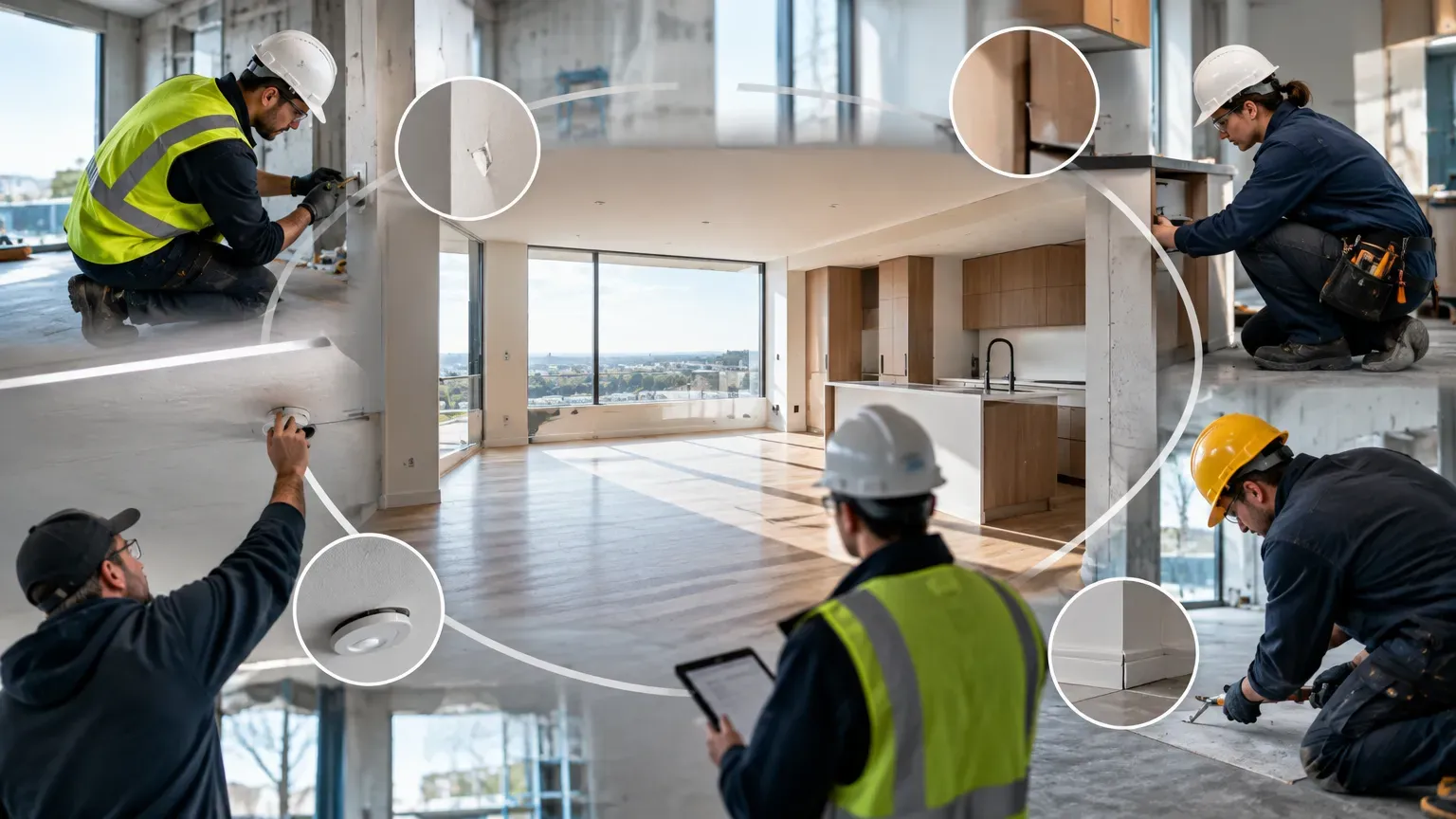
The short answer
A growing snag or punch list is not automatically a sign of poor quality.
It can be normal closeout.
It can also mean the project is presenting work for completion before it is genuinely ready, causing inspectors and supervisors to discover defects that should have been resolved earlier.
The trend matters more than the list length.
Snagging becomes expensive when it turns into repeated production
Closeout work has a different rhythm from main production.
Teams return to small areas.
Access is fragmented.
Finished surfaces need protection.
Several trades may need to revisit the same room for separate defects.
The labour cost per item can become disproportionately high.
This is why a large snag list is not just an administrative burden.
It can become a second production cycle.
The project appears complete, yet significant labour remains tied up in revisiting work already counted.
The key signal is whether new snags are slowing down
At some point, every project accumulates defects.
The healthy pattern is that new items fall while closures rise.
If new snags continue appearing at the same rate late in the job, something may still be weak upstream.
Work may be presented too early.
Self-checking may be poor.
One subcontract package may have a recurring quality issue.
Later trades may be damaging earlier work.
The count by itself does not reveal this.
The direction does.
Management should watch whether the project is genuinely converging toward zero or simply moving defects around.
Repeated visits destroy closeout productivity
One defect may require a painter.
Another needs an electrician.
A third requires a ceiling contractor.
If each trade returns separately, the area can remain open for days.
Good closeout sequencing matters.
Where possible, the project should package defects by location and trade, create clear access windows and avoid repeated remobilisation.
This does not mean delaying urgent defects.
It means treating snag closure as planned production rather than ad hoc repair.
The wider completion-control view becomes especially important because physical completion can be high while acceptance effort remains substantial.
A snag list can expose where work was presented too early
One of the most useful metrics is repeat rejection.
If the same area is inspected several times before acceptance, the project is spending inspection capacity on unfinished work.
The problem may sit in supervision, package quality or programme pressure.
Teams sometimes present work early because they fear losing an inspection slot.
That can create the opposite result.
The inspector returns, downstream work waits and the same area consumes more management time.
Readiness should therefore come before presentation.
Cosmetic defects and functional defects should not compete equally
Late in a project, the snag list can contain hundreds of items.
Not all have the same consequence.
A minor finish defect may be inconvenient.
A failed door function, incomplete fire-stopping detail or untested system can block acceptance or operation.
Prioritisation should reflect consequence.
Safety.
Function.
Client acceptance.
Access.
Programme.
Commercial milestone.
This allows the project to close critical items first without losing visibility of the remaining finish work.
Defect ownership should not fragment the client experience
Internally, each item may belong to a different subcontractor.
The client sees one project.
If closeout is managed entirely through package ownership, rooms and systems can remain partially unfinished while every trade focuses on its own list.
A stronger closeout view follows the area or asset.
Is this room ready?
Is this system ready?
What remains before it can be accepted?
That creates a more coherent handover experience.
It also prevents the project from declaring individual package completion while the integrated result remains incomplete.
A short snag list can still hide a serious closeout risk
Projects sometimes improve the headline count by closing easy items first.
The total falls.
The remaining items become harder.
One unresolved defect may require redesign, replacement, specialist access or client agreement.
Management should therefore understand age and consequence alongside count.
A list of twenty difficult items can be riskier than a list of two hundred simple finish defects.
The closeout report should make that distinction visible.
Closeout performance can also reveal which subcontract packages were truly well controlled during the main works.
A package that looked successful on cost and programme may generate disproportionate snagging, repeated visits and missing handover information.
Those late costs should inform future supplier and subcontractor evaluation.
Otherwise the business rewards packages for appearing complete early while ignoring the effort required to make them genuinely acceptable later.
Snag management also benefits from understanding where defects are being created.
If most new items appear after one trade finishes, the project may need stronger package quality control.
If they appear after several trades pass through the same areas, the issue may be protection and interface management.
If defects cluster in the final days before inspection, programme pressure may be driving premature presentation.
These patterns tell management where to intervene.
The snag list then becomes more than a closeout queue.
It becomes feedback on how the project is finishing work.
There is also an important sequencing question.
Some defects should be closed before later trades enter because access will disappear.
Others are better left until the risk of damage from remaining construction has reduced.
Closing everything immediately is not always efficient.
The project should consider whether an item is blocking acceptance, likely to worsen, or likely to be damaged again by ongoing work.
That judgement can reduce repeated effort.
A mature closeout plan also protects completed areas.
Once a room or system is genuinely accepted, access should become more controlled.
Otherwise new defects are created faster than old ones are closed.
The project ends up chasing a moving target.
This is one reason area-based handover can work well.
It creates a clear transition from active construction to protected completed space.
The site begins shrinking the unfinished project rather than treating the whole building as active until the final day.
That creates psychological value too.
Teams can see completed areas leaving the production system.
Closeout becomes visible progress instead of an endless list.
The project is not merely reducing snag count.
It is converting construction space into accepted asset.
There is also a behavioural risk when the snag list becomes the main quality-control mechanism.
Teams can begin to assume that defects are normal because “snagging will catch them later.”
That mindset is expensive.
Snagging should identify residual closeout items, not replace good production quality.
The more the project relies on final inspection to find routine workmanship defects, the more labour it spends returning to completed areas.
A healthier pattern is that package-level self-checking catches obvious issues first, formal inspection confirms acceptance, and the final snag list becomes progressively smaller and more focused.
This also changes morale. Endless repeated snagging creates the feeling that the project is never truly finishing.
Clear area-based closure gives teams a sense that work is leaving the production system permanently.
That psychological signal can matter during the exhausting final phase of a long project, when attention and discipline are hardest to maintain.
The closeout team should therefore watch not only how fast items are being closed, but whether the same type of defect keeps returning after closure. Recurrence is a stronger warning than list size alone.
That trend helps management distinguish a project that is truly converging from one that is simply processing defects faster than it creates them.
Where Epicor Saturn fits in snag and closeout control
Epicor provides the enterprise-grade ERP foundation for commitments, approvals, finance and governance. Epicor Saturn adds the construction and engineering project context that connects snag items with locations, subcontract packages, progress, rework and handover.
That relationship helps management understand whether physical completion is translating into accepted project completion.
Epicor Saturn provides the project-centric construction layer while Epicor supplies the enterprise-grade business foundation beneath it. Explore Epicor Saturn for construction and engineering.
Frequently asked questions
Is a large snag list always bad?
No. The trend, severity, repeat causes and closure rate matter more than the raw count.
Why does snagging become expensive?
Because trades revisit fragmented finished areas with high mobilisation and access overhead.
Should all snags have equal priority?
No. Safety, function, acceptance and programme consequence should guide priority.
What is a sign that work is being presented too early?
Repeated inspection failure or recurring defects that should have been caught by self-checking.